
Educational Information on Basic Foods
SolidMaleEating is an informational resource dedicated to explaining the composition and nutrient content of everyday, traditional foods.
Educational content only. No promises of outcomes.
Purpose of This Resource
SolidMaleEating exists as an educational knowledge hub about basic foods and their natural nutrient composition. The site explains what naturally occurs in everyday ingredients and the general roles these nutrients play in human nutrition.
This resource is not a medical consultation, a nutrition service, a dietary program, or a method system. It is purely informational and educational in nature.
The content describes traditional Polish and Eastern European foods that have formed the basis of everyday eating for generations. Modern nutritional science helps us understand why these traditional patterns provided balanced nutrition through simple, affordable ingredients.
What We Explain
This website provides information on:
- Natural nutrient content in basic foods (vegetables, grains, dairy, proteins)
- Roles of vitamins and minerals in general metabolism
- Examples of traditional food sources of these nutrients
- Effects of food preparation on nutrient content
- Principles of variety in everyday eating
- Traditional Polish and Eastern European eating patterns
All information is presented in a purely descriptive, educational manner. We explain what is naturally present in foods and what scientific research demonstrates about their general roles.
What We Do Not Provide
This resource explicitly does not:
- Provide individual dietary recommendations or meal plans
- Claim that foods treat, cure, or prevent any disease
- Make promises about health outcomes or physical changes
- Prescribe specific foods for specific individuals
- Replace professional medical or nutritional advice
- Sell products, supplements, or services
- Offer consultations or personalized guidance
We are an educational information resource only.
Educational Context
All materials on this site are educational in nature. The information describes what science has demonstrated about the composition of foods and the general roles of nutrients in human physiology.
Individual responses to foods vary widely. Different people have different nutritional needs, dietary restrictions, health conditions, and food preferences. Personal food choices should be made by individuals based on their own circumstances, potentially with guidance from healthcare or nutrition professionals appropriate to their situation.
This website provides general educational information that may support personal understanding of food and nutrition. It does not provide personalized dietary advice.
Traditional Foods as Foundation
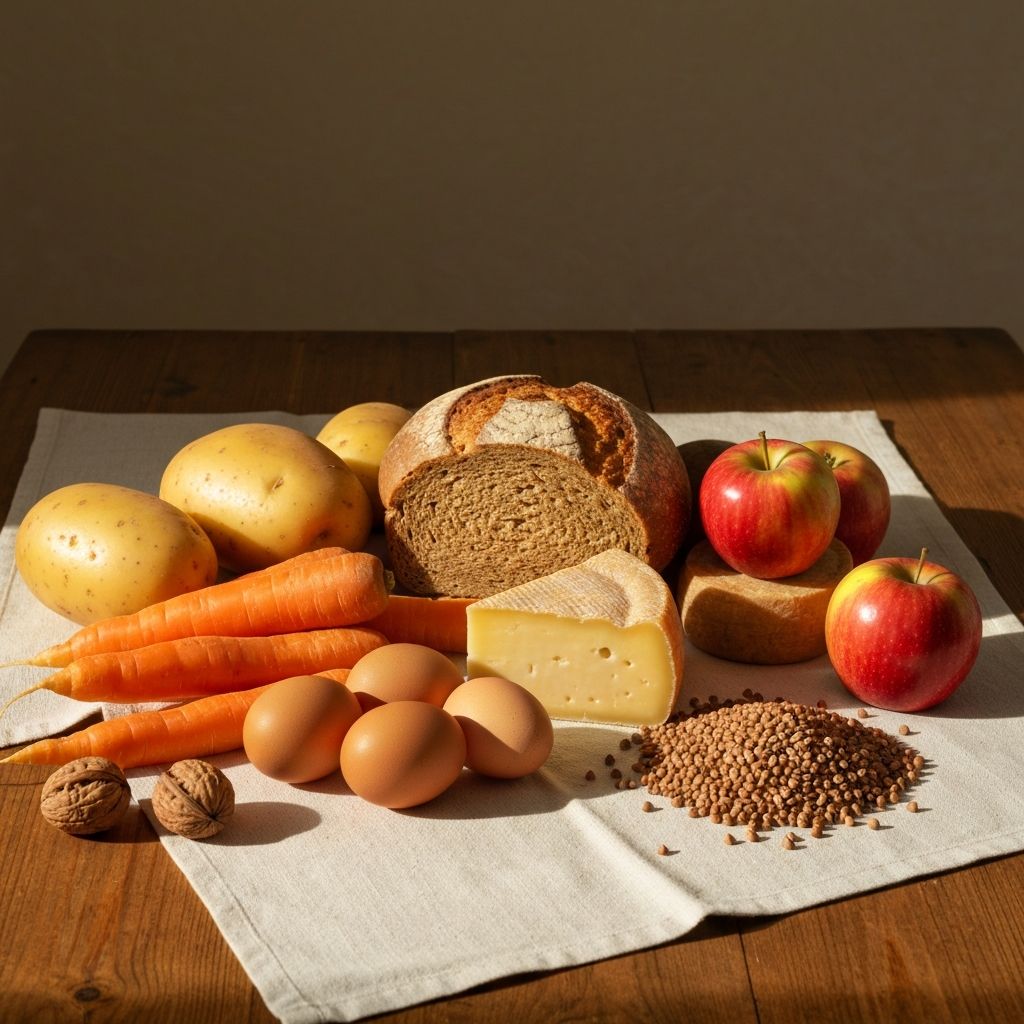
The foods featured in this resource are traditional staples of Polish and Eastern European cuisine:
Root vegetables: Potatoes, carrots, parsnips, beets, turnips—affordable, storable, nutrient-dense. These have been fundamental foods for centuries.
Fermented dairy: Kefir, quark, buttermilk—traditional methods of preserving milk, providing probiotics and nutrients. These foods have long histories in the region.
Whole grains: Rye, buckwheat, barley, oats—grown locally, providing carbohydrates, fiber, and minerals. These grains have been staple foods historically.
Simple proteins: Eggs, fish (especially herring), legumes—traditional protein sources that combine well with other basic foods.
Fruits and nuts: Apples, berries, walnuts, hazelnuts—naturally growing in the region, providing vitamins, minerals, and healthy fats.
These foods, when combined simply, have provided complete nutrition without special products or systems.
Simple Eating Principles
Rather than promoting any particular diet or system, we describe simple principles observed in traditional eating patterns:
Variety: Including different foods from different food groups provides a broader spectrum of naturally occurring nutrients.
Whole foods: Foods in their natural state contain nutrients in their original forms and combinations, alongside fiber and other compounds.
Simplicity: Traditional meals often combined just a few basic ingredients prepared simply, without complex processing.
Seasonal adaptation: Eating foods available in season has been a practical necessity and nutritional strategy historically.
Tradition: Eating patterns that have sustained populations for generations tend to be nutritionally adequate.
These principles do not require special knowledge, expensive products, or complicated systems. They are accessible observations from how people have eaten successfully.
Contact and Questions
If you have questions about this resource or its content, please feel free to contact us through our contact page.
For questions about your personal diet, health, or nutrition, please consult with appropriate healthcare or nutrition professionals.
Return to Home Contact Us